Skip to content

Aldenco Estate, Galadimawa

Seek through knowledge

Barvij International Schools
Academics

British and Nigerian curricula, from creche to IGCSE.

Early Years follows the UK Early Years Foundation Stage. Primary and secondary bring the Nigerian and British curricula together, with a pathway to IGCSE in Years 10 and 11.

6 months – 5 years

Early Years and Foundation Stage

A stimulating, nurturing start from creche to Reception — curiosity, creativity, confidence, and a love for learning.

Guided by the UK EYFS framework, the programme covers seven connected areas of learning through purposeful play, exploration and guided learning.

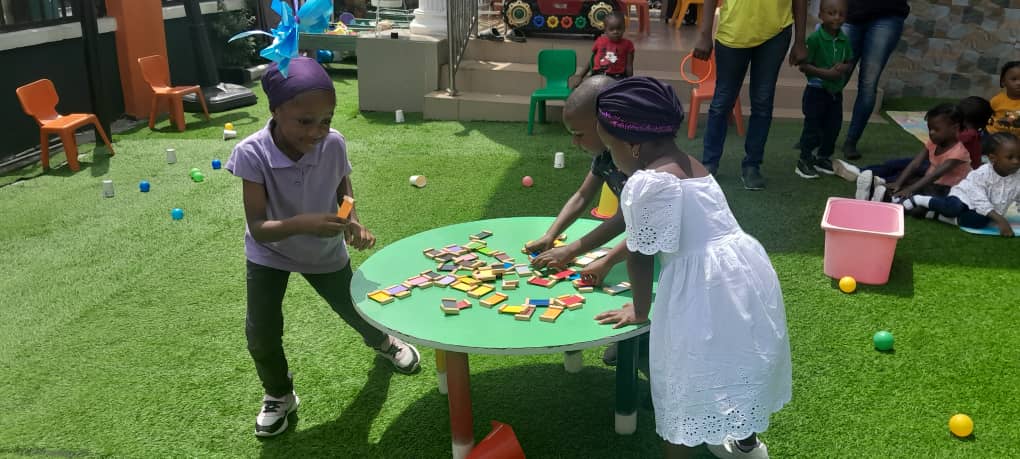
Early years children working with blocks at an outdoor table

Foundations for growth

  • Communication and language
  • Physical development
  • Personal, social and emotional development

Learning and discovery

  • Literacy
  • Mathematics
  • Understanding the world
  • Expressive arts and design

Learning objectives

  • Strong foundations in language, literacy and numeracy.
  • Creativity, curiosity and independent thinking.
  • Social, emotional and physical development.
  • Confidence, independence and positive self-esteem.
  • Readiness for a smooth move into Key Stage 1, ages 5–7.
How teachers work

  • Play-based learning and exploration.
  • Practical, hands-on activities.
  • Storytelling, imagination and role-play.
  • Music, movement and creative expression.
  • Age-appropriate technology.

Assessment

Progress is watched through observation, constructive feedback and regular parent-teacher conferences, so each learner gets the guidance they need.

Family engagement

  • Regular communication, updates and newsletters.
  • Parent-teacher conferences.
  • Classroom volunteering.
  • School events and workshops.
The pathway

Four stages of Early Years

Creche & toddler Early Birds

A warm introduction: early stimulation, sensory exploration, communication and social development.

Pre-nursery Red Robins

Language, creativity, independence and curiosity through engaging activity.

Nursery White Swans

Foundations in literacy, numeracy, communication and social interaction.

Reception Sunshine

Confidence, independence and academic readiness for Key Stage 1.

Years 1 – 2 · ages 5–7

Key Stage 1

Key Stage 1 builds on Early Years with a more structured approach. It follows the Nigerian and British curricula, and puts weight on essential knowledge, practical skills and positive learning habits. Interactive lessons, guided exploration and collaborative work help pupils become curious thinkers and confident participants.

English

Reading, writing, speaking and listening. Phonics, comprehension, vocabulary and creative writing build the communication skills learning depends on.

Mathematics

Numbers, basic operations, shapes, measurement and mathematical ideas. Practical work and problem-solving build logical reasoning.

Science

Children investigate, question and discover. Observation, exploration and simple experiments introduce living things, materials and everyday science.

Wider learning

  • Art and design
  • Physical education
  • French
  • Computing
  • Music

Art explores drawing, painting, construction and creative projects. PE builds fitness, coordination and teamwork. French introduces vocabulary and simple expressions. Computing starts responsible digital skills. Music uses singing, rhythm and movement.

Years 3 – 6 · ages 7–11

Key Stage 2

Key Stage 2 deepens what pupils gained in Key Stage 1. The curriculum follows the National Curriculum for England. It challenges pupils intellectually while nurturing confidence, responsibility, creativity and critical thinking, and prepares them for Key Stage 3.

English

Fiction, non-fiction and poetry develop comprehension, vocabulary and literary appreciation, alongside grammar, spelling, punctuation and creative writing.

Mathematics

Number operations, fractions, decimals, geometry, measurement and data. Fluency, logical reasoning and problem-solving are practised in real situations.

Science

Investigation, experimentation and discovery. Pupils question, observe, analyse and draw conclusions through practical and collaborative work.

Wider learning

Art and design covers drawing, painting, printmaking and sculpture. PE develops fitness, teamwork and sporting skill. French expands vocabulary and everyday conversation. Computing includes age-appropriate programming, coding and safe use of digital tools. Music explores rhythm, melody and harmony, with a chance to try instruments such as the saxophone, clarinet, trumpet and piano.

Years 7 – 9 · ages 11–14

Key Stage 3

Key Stage 3 is the bridge from primary to secondary. It integrates the Nigerian and British curricula and prepares learners for the independence of Key Stage 4 and for IGCSE pathways.

The focus is academic excellence, critical thinking, creativity, communication and problem-solving. Students explore a wide range of subjects so they can see their interests and strengths.

  • English
  • Mathematics
  • Biology
  • Chemistry
  • Physics
  • History
  • Geography
  • Nigerian Studies
  • French
  • Art and design
  • Music
  • Computing
  • GSM repair
  • Garment repair
  • Physical education
  • PSHE
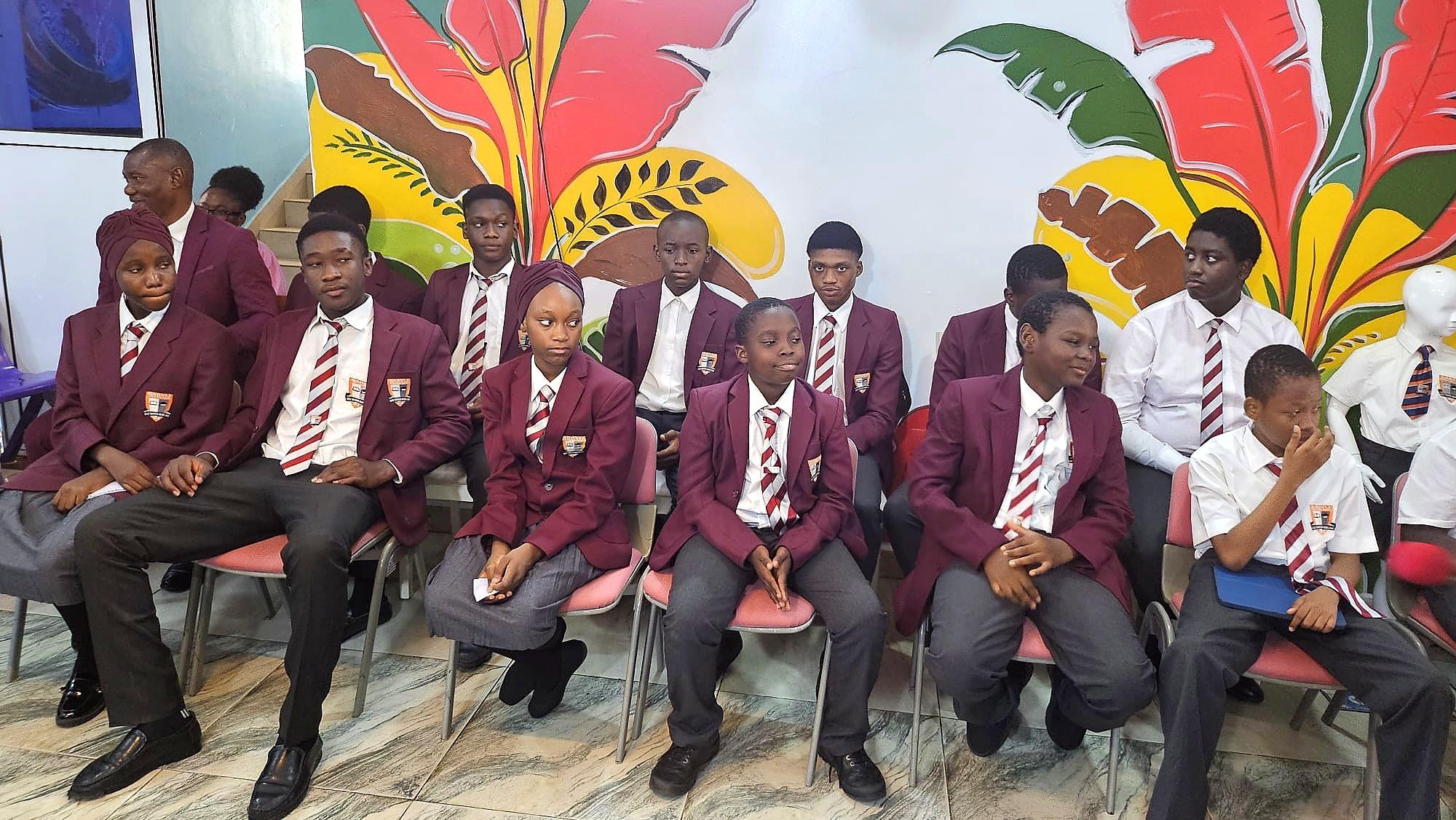
Secondary pupils in maroon blazers at a school gathering
Years 10 – 11

Key Stage 4

Key Stage 4 is where students focus more closely and prepare for external examinations. It offers a pathway to internationally recognised IGCSE qualifications, on the base built in Key Stage 3. The programme brings the Nigerian and British curricula together.

English and Mathematics are organised into ability-based groups, so teachers can give focused guidance, extra support, or further challenge.

  • English
  • Mathematics
  • Further Mathematics
  • Biology
  • Chemistry
  • Physics
  • History
  • Geography
  • Economics
  • French
  • Art and design
  • Music
  • Computing
  • Physical education

Further Mathematics is an option for students with strong mathematical ability. Sciences are studied as separate subjects.

Years 10 and 11

Teaching and learning

Lessons ask students to go beyond memorising. They explore ideas, examine evidence and apply what they have learnt. Teachers use guided instruction, independent study, practical tasks and classroom discussion. Students are expected to take more ownership of their progress.

Independent research

Students investigate topics, gather information and learn to support a conclusion.

Practical application

Laboratory work, creative assignments and subject activities show understanding beyond written exercises.

Structured teaching

Complex topics are introduced in manageable stages, with practice that strengthens understanding.

Shared learning

Conversation, group tasks and peer work expose students to other viewpoints and help them defend an idea.

Digital resources

Technology supports materials, independent investigation and essential digital skills.

Examination preparation

Practice questions, mock examinations, class assessments and progress reviews show students what the exam expects, and where to work next. Teachers help with weaker areas, revision routines and confidence with questions.

Arts

Visual art

Visual art gives students room to explore imagination, communicate ideas and express themselves. They meet drawing, painting, sculpture and digital art, and learn about colour, shape, texture, composition and presentation.

The programme also asks for originality, patience, observation and creative problem-solving. Students experiment, develop a style and gain confidence in their own work.

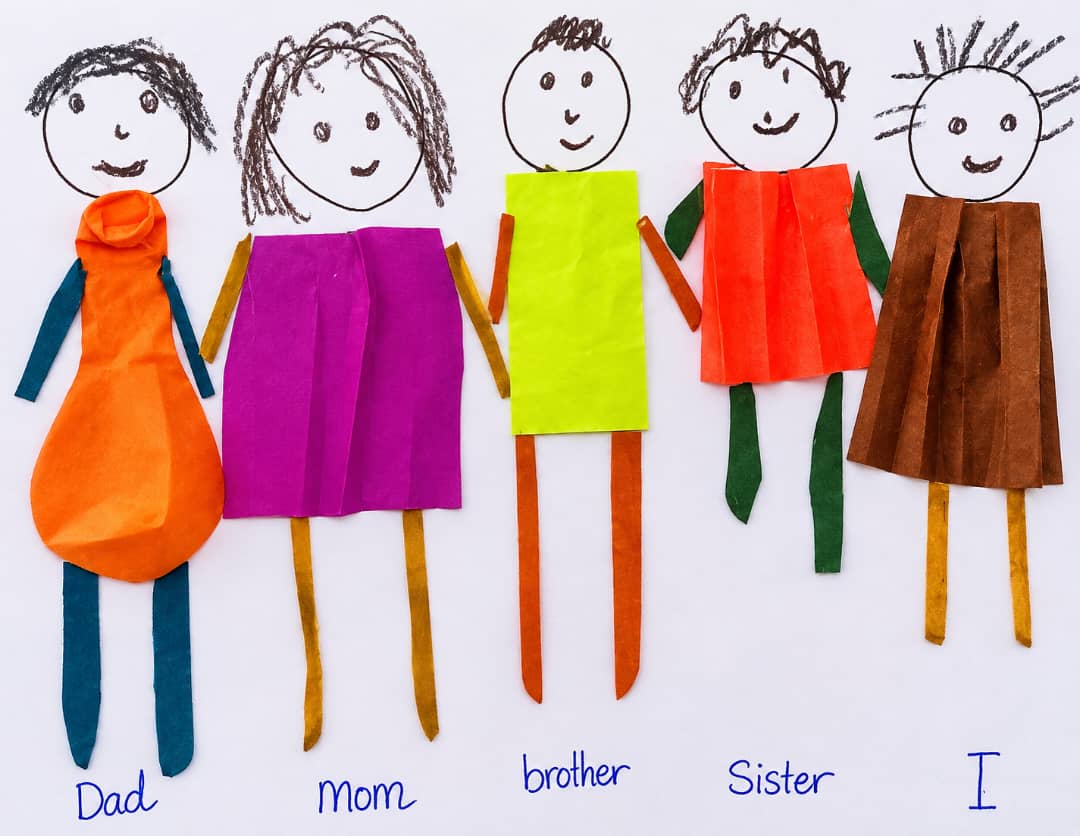
A paper collage of a family made in an art activity
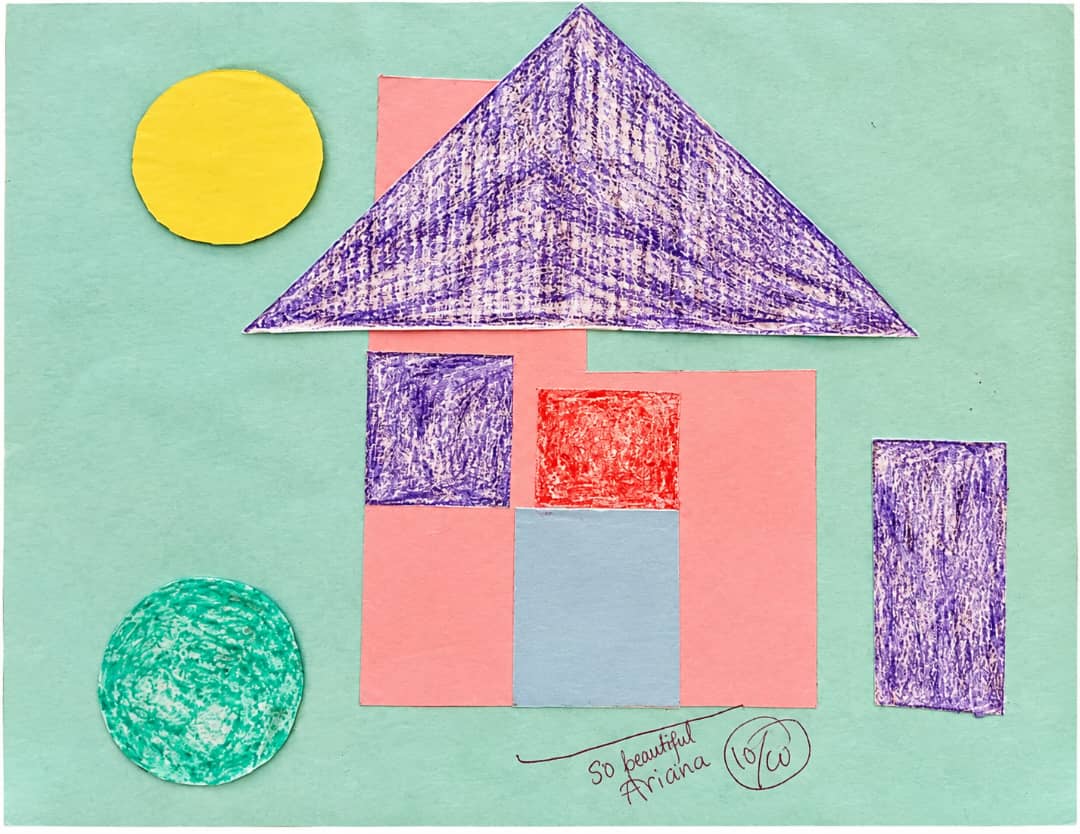
A child’s collage of a house, sun and tree

Key Stage 1

Discovering creativity. Colour, shape, pattern and texture through drawing, painting, cutting, modelling and craft.

Key Stage 2

Developing skill. A wider range of materials, more detailed compositions, selected artists, and individual and group projects.

Key Stage 3

Exploring ideas. Observation, recording, themes, processes, and discussion of technique and meaning.

Beyond the lesson

Art clubs, exhibitions, museum and gallery visits, competitions, community projects, digital illustration, photography, and chances for families to see the work.

Admissions

Ask about a place.

Tell us the stage you have in mind, from creche through to Year 11.